
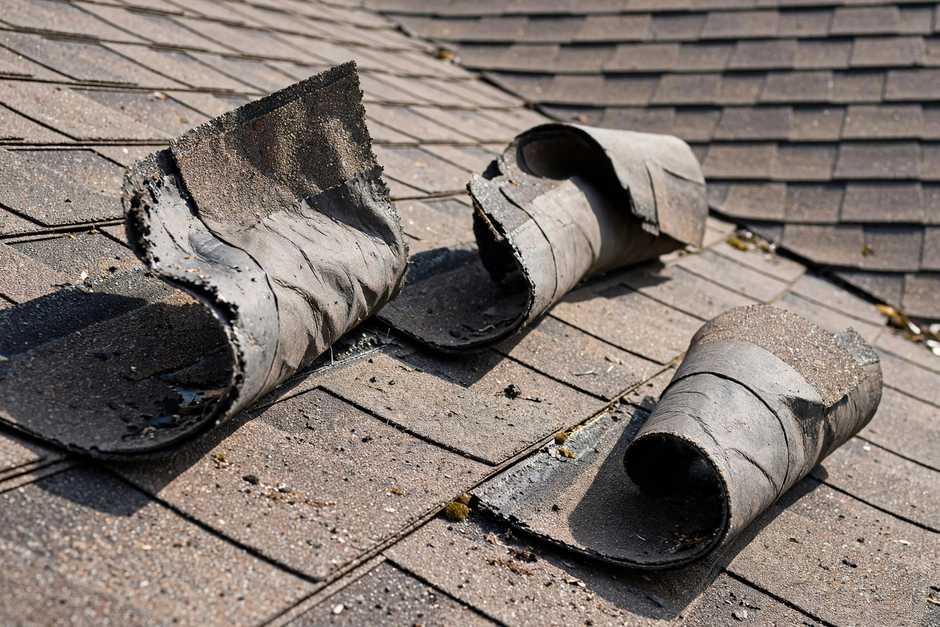
How wind damages a roof
Wind breaks the adhesive seal between shingles, lifts edges — damage usually starts at eaves and rakes — then tears off shingles and flashing. Straight-line winds of 65–80 mph produced widespread minor roof damage in the 28 May 2024 metro event, and at 85–95 mph a church in Garland lost part of its roof and end wall while a large commercial building lost two walls and part of its roof. The strongest gust measured within 10 miles of Duncanville since 2006 was 81 mph, on 13 March 2019. The NCTCOG-adopted design wind speed for this area is 115 mph (3-second gust).
Age makes wind damage worse. Sealant strips lose adhesive strength as asphalt ages under attic heat, and improper nailing — missing the nailing zone — is a leading installer-caused wind failure. A roof that survived its first decade can start losing shingles in winds it once shrugged off, because the seals, not the shingles, have aged. There is no standalone wind-damage service page on this site for a reason: wind is one part of storm damage roof repair, alongside hail and rain, and it is assessed and repaired as part of that scope.
What to check after a wind event
Check from the ground first, and never climb a wet roof. Look for shingle pieces in the yard, lifted or creased shingles visible from the ground, missing ridge caps, loose or bent flashing, and gutters pulled away from the fascia. Inside, look for new ceiling stains — a lifted shingle lets the next rain straight into the underlayment, and the decking around it starts to rot within weeks. Photograph everything with the date. Our hail damage guide covers the checks that overlap with wind, since most Duncanville storms bring both.
Repair, documentation and insurance
Wind repair is usually shingle replacement with matching material, reseating lifted shingles, and checking the surrounding field for creased shingles that are about to go. The repair should also check the flashing the wind worked loose. Before any repair, document the damage with dated photos and get a written inspection with measurements — the same discipline as for hail.
On insurance: wind damage from a sudden storm is generally a covered event, while age and wear are not. Texas law requires the homeowner to pay the deductible, and a contractor must not offer to cover it for you. A roofer may inspect and document damage, provide a written estimate and meet the adjuster on site, but may not act as a public adjuster. If water is coming in now, see our emergency roof repair page for what to do first, and our hail damage roof repair page for the documentation standard. To arrange an inspection, call (469) 898-7253.