
Hail Damage Roof Repair Duncanville TX
Hail is the DFW claim driver, and documentation is the job
Hail bruises shingles, knocks granules loose and dents vents and gutters, and the damage is often invisible from the ground. Cabrera & Sons Roofing inspects with photos and documents it properly. Call (469) 898-7253.
What Hail Damage Roof Repair Duncanville TX Involves
Hail is the dominant storm risk for a Duncanville roof. The peak hail season runs March to June, with a second smaller round in September and October. The closest large-hail event in the record checked was 3-inch hail on 26 April 2026, about a mile away in Cockrell Hill, and a 4-inch hail event hit nearby Cedar Hill on 12 June 2023. Earlier hail near Duncanville included 2-inch hail at Florence Hill on 1 June 2025, 2-inch hail on 9 April 2021, and 2-inch hail on 26 April 2017.
No shingle is hail-proof. Class 4 impact-resistant shingles are tested to UL 2218, which drops a steel ball on the shingle, but a 3-inch stone carries far more energy than that test. What a hail inspection has to do is show, with dated photos, what the hail did to your roof, so the claim file and the repair quote are built on the same record.
Why Fix Hail Damage Early
Hail damage does not heal, and the bruises it leaves turn into leaks a season later. Fixing it early keeps the damage to one storm.
Bruises Become Leaks
A bruised shingle mat loses granules with every rain, and the mat underneath wears faster once the granules are gone.
Granule Loss Speeds Wear
Hail damage is often invisible from the ground. An inspection with photos finds it while the claim can still be filed.
Invisible From the Ground
Dated photos taken soon after the storm are what a claim file needs. Waiting means the evidence washes away with the next rain.
Documents the Damage in Time
A roof that is inspected and repaired promptly, with the damage documented, is a roof whose next storm starts from a sound field.
How Our Hail Repair Process Works
A hail repair follows the same order every time, so the damage is documented before it is repaired.
Your Call
You tell us when the hail fell and how big it was, if you know. That tells us what to look for.
Roof Inspection With Photos
We walk the whole roof, slope by slope, and photograph bruising, granule loss, cracked shingles and dented vents and gutters.
Attic Check
We check the attic for daylight, wet insulation and stained decking, so the record covers what the hail did underneath as well.
Written Quote
We quote the repair in writing, with the scope and the materials listed, before any of it starts.
The Repair
We do the repair, magnet-sweep the yard, clear the gutters, and show you photos of the finished work.
Roofing Expertise You Can Verify
Cabrera & Sons Roofing is based at 170 E Hwy 67 in Duncanville, and the hail work is Duncanville work: bruised shingle mats after the spring hail season, granule loss in the gutters, and dented vents and gutters that show where the hail hit hardest. We document the damage with dated photos and quote the repair in writing.
- Rated 4.9 out of 5 from 51 Google reviews, with five reviews shown in full on our home page
- Dated photos of bruising, granule loss and dented vents and gutters, slope by slope
- Hail season knowledge: March to June peak, with a second round in September and October
- Written estimates with the scope and materials listed before work starts
- Magnet sweep and gutter clearing at the end of every job
Why Duncanville Homeowners Choose Us for Hail Repair
Homeowners call us after hail when they want the damage documented and the repair done properly, and they judge us on whether the roof holds through the next storm.
Slope-by-Slope Inspection
We inspect the whole roof slope by slope, and photograph bruising, granule loss and dented metal, so the record shows what the hail did.
Written Estimate With Photos
The estimate lists the repair and the materials, and if the roof needs more than a repair, we say so before work starts.
Honest About Repair vs Replace
We document hail damage with dated photos and a written scope. We do not negotiate claims and we do not waive deductibles, which is illegal in Texas.
Clean Jobsite, Every Day
Tarps, magnet sweeps and gutter clearing are part of the job, and the yard is left as we found it.
What Our Hail Damage Roof Repair Includes
A hail repair is a defined scope. These are the parts of it, and each one is in the written estimate before work starts.
What's Included
Roof Inspection With Photos
We walk the whole roof, slope by slope, and photograph bruising, granule loss, cracked shingles and dented vents and gutters.
Attic Check
We check the attic for daylight, wet insulation and stained decking, so the record covers what the hail did underneath as well.
Bruised Shingle Replacement
Hail-bruised shingles are replaced where the damage is isolated, and the tabs around them are checked.
Dented Metal Documentation
Dented vents, gutters and flashing are documented as part of the storm record, and replaced where they are damaged.
Flashing Replacement
Failed flashing is replaced, not caulked over, at walls, valleys and chimneys.
Hail Problems We Solve in Duncanville
These are the hail problems we see most often on Duncanville roofs. Each one is documented with dated photos before it is repaired.
Bruised shingle mats
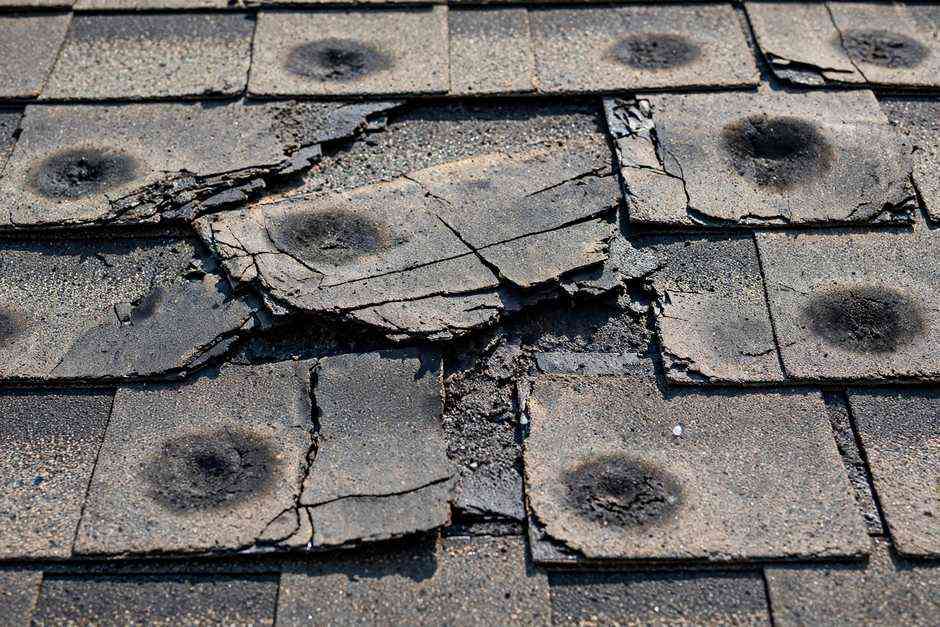
Hail bruises the shingle mat where it hits, leaving dark, soft spots and knocking granules loose. We photograph the bruising slope by slope.
A bruised mat loses granules with every rain, and the mat underneath wears faster once the granules are gone. The damage is documented before it is repaired.
Granule loss in the gutters
Granules collect in the gutters after hail, and the shingles underneath are losing the layer that protects them from sun and rain.
Granule loss in the gutters is the roof wearing out in plain sight after a storm. It is documented with photos, slope by slope.
Cracked and lifted shingles
Hail cracks shingles and lifts tabs, and the cracks let water under the field. We replace the cracked shingles and check the tabs around them.
A cracked shingle is an open door for the next rain. Replacing it promptly, and checking the tabs beside it, keeps the field sealed.
Dented vents, gutters and flashing
Hail dents vents, gutters and flashing, and the dents show where the hail hit hardest. We photograph them as part of the storm record.
Dented metal is evidence of the storm's path across the roof. It is documented alongside the shingle damage, not after it.
When to Call for Hail Roof Repair
Hail fell in your area
Hail fell in your area, and you want the roof checked before the damage turns into a leak.
Hail damage is often invisible from the ground. An inspection with photos shows whether it is isolated or across the field.
Granules or bruising after a storm
Granules are collecting in the gutters, or shingles are bruised and cracking after a storm.
Granule loss and bruising are the visible signs of hail damage. Both are worth documenting promptly.
Dented vents or gutters
Vents, gutters or flashing are dented after a storm.
Dented metal shows where the hail hit hardest, and it is part of the storm record.
Stain after a hailstorm
A stain appears on the ceiling after a hailstorm, or a drip starts during heavy rain.
A stain means water has already crossed the decking. The sooner it is traced, the smaller the repair.
Tools and Methods We Use on Hail Repairs
Tools & Equipment
Camera for dated photos
A camera, to photograph bruising, granule loss and dented metal with dates, slope by slope.
Moisture meter
A moisture meter, to find wet decking and ceiling cavities before we close the roof up over them.
Roofing hammer and pry bar
A roofing hammer and pry bar, to lift shingles cleanly and reset them without damaging the field around them.
Ladder and safety harness
A ladder and safety harness, so the crew is tied off on steep pitches and two-story homes.
Chalk for marking bruises
Chalk for marking, to mark bruised shingles during the inspection so the record is complete.
Slope-by-slope inspection
Inspect slope by slope, so the record covers the whole roof and not just the worst slope.
Methods & Techniques
Bruising photographed with granule loss
Photograph bruising with granule loss, so the record shows what the hail did to the mat.
Attic checked for daylight
Check the attic for daylight and wet insulation, so the record covers what the hail did underneath.
Written quote before work
Quote the repair in writing, with the scope and the materials listed, before it starts.
Repair checked and photographed
Check the repair against the roof and the attic before we leave, and photograph it for your records.
How Hail Repair Works in Duncanville
Duncanville hail is a dated record, not a cliché about hail alley. The events that matter are 26 April 2026, when 3-inch hail fell; 12 June 2023, when 4-inch hail fell at Cedar Hill, six miles away; 9 April 2021, with 2-inch hail; and 26 April 2017, also 2-inch. Against that record, the Class 4 test — a 2-inch steel ball dropped twice from 20 feet with no through-crack — is put in its place: a 3-inch stone carries roughly five times that energy, and no shingle is hail-proof.
Service Areas
Forest Hills: East-central homes, built in 18 installments from 1966 to 1978, where a hail inspection covers the whole field, slope by slope, with photos.
Fairmeadows: Mid-century ranches in north-central Duncanville, where a hail inspection is dated against the last storm and the roof's age, with photos.
Greenbriar Estates: Established lots in south Duncanville, built mostly in the early 1980s, where a hail inspection covers the field and the metal — vents, gutters and flashing — with photos.
Wheatland Road corridor: Homes along Wheatland Road, where a hail inspection is dated against the last storm, with photos for the insurance file.
Cedar Ridge Drive: The north-south corridor along Cedar Ridge Drive, in a city where the largest hail since 2006 was 4-inch stone at Cedar Hill on 12 June 2023, about six miles away.
Local Considerations
The dated hail table
The dated hail table: Four dates anchor the page: 26 April 2026 at 3 inches, 12 June 2023 at 4 inches in Cedar Hill, 9 April 2021 at 2 inches, and 26 April 2017 at 2 inches.
UL 2218 and the 3-inch stone
UL 2218 and the 3-inch stone: The Class 4 test drops a 2-inch steel ball twice from 20 feet. A 3-inch hailstone carries roughly five times that energy, which is why Class 4 is impact-resistant, not hail-proof.
No shingle is hail-proof
No shingle is hail-proof: That line is the trade-off in plain language, and it sits alongside the cosmetic-damage exclusion that can leave a bruised-looking roof outside a claim.
How Hail Bruising Is Checked on a Roof
A hail bruise is found by touch, not by sight alone. The shingle looks whole from the ground, but the mat underneath is soft where the stone crushed the granules into it, and the spot gives under a thumb.
The work is a slope-by-slope inspection, pressing the mat and photographing each bruise with a date, so the record shows which slopes were hit and which were not.
Maintenance & Follow-up
Have the roof inspected after any hail event, and keep the dated photos with your insurance paperwork. A bruise found early is a leak that never happens.
Granule loss after hail shows as grit collecting in the gutters and at the bottom of the downspouts. The shingles above are losing the layer that protects them from sun and rain, but granules alone do not prove hail.
The work is documenting the granule loss with photos, then checking the shingles above for bruising and cracking, because the bruise is the hail evidence and the granules are only the clue.
Maintenance & Follow-up
Watch the gutters after hail, and have the roof checked when granules appear. Granule loss is the roof wearing out in plain sight, and hail speeds it up.
Dented vents, gutters and the air-conditioning condenser show where the hail hit hardest, and the dents are evidence of the storm's path across the roof. Metal dents where shingles bruise.
The work is photographing the dents as part of the storm record, slope by slope, so the path of the storm is mapped before any shingle is lifted.
Maintenance & Follow-up
Check the vents and gutters after any hail event. Dented metal is the visible sign of a storm that also hit the shingles.
Frequently Asked Questions
Have questions? We have answers. If you do not see your question here, call us at (469) 898-7253.
Call UsWhat does hail damage look like on a roof?
Hail bruises show as dark, soft spots on the shingle mat where the impact crushed the granules, with granules washing into the gutters and dents on vents and gutters. The damage is often invisible from the ground, which is why the inspection is done on the roof, slope by slope, with photos. How to tell if your roof has hail damage
How do I file a hail damage roof claim in Texas?
Photograph the damage, do what you can to stop more water getting in, and file with your insurer as soon as you can. Get an inspection and a written estimate, and be there when the adjuster inspects the roof. We provide the inspection, the dated photos and the written estimate, and we can meet the adjuster on the roof. We do not negotiate claims.
Can a roofer cover my deductible?
No. It is illegal in Texas for a contractor to offer to waive, rebate or absorb a deductible. Any roofer who offers to do so is offering to break the law, and the offer itself is a warning sign.
Can a roofer act as my insurance adjuster or negotiate my claim?
No. A roofer who is doing the work may not act as a public insurance adjuster on the same claim, and may not advertise that they will. Our lawful role is the inspection, the dated photos and the written estimate, and meeting the adjuster on the roof.
What to Check Before You Hire Us
After hail, check that the inspection shows bruising, not just dents.
What you can check
Ask for dated hail-bruise photos and a written scope before any claim paperwork. Ask what size the hail was on your roof's date, and whether the bruising is on one slope or across the whole roof.
What customers say
Ask whether the scope separates bruising from ordinary wear, and keep the dated photos with your paperwork. Call (469) 898-7253 after a hail event.
Related Services
Storm Damage Roof Repair · Emergency Roof Repair · Roof Inspection
What Duncanville Homeowners Say
One of the five reviews on our Google profile, exactly as the customer wrote it. The other reviews are counted in the 4.9 out of 5 aggregate from 51 reviews.
“Jared and his team did a great job from start to finish. They came out, inspected the roof, and had everything done in about a day and a half. The crew was professional, kept everything clean, and even hauled off all the old roofing material. The price was fair and I felt they were honest the whole way through. My roof looks great and I finally have peace of mind knowing it’s done right. I would definitely recommend Cabrera & Sons Roofing to anyone looking for a reliable roofing company.”
A Terrell
Google review
Get Your Hail Damage Roof Repair Duncanville TX Quote
Call Cabrera & Sons Roofing at (469) 898-7253. Tell us when the hail fell, and we will inspect the roof slope by slope, document the damage with dated photos, and quote the repair in writing.