
Commercial Roofing in Duncanville Built for Texas Weather
Procurement, not pitches: scope, schedule and documentation
A commercial roof is bought by an owner or a property manager, and the decision is about scope, schedule, disruption and documentation. Cabrera & Sons Roofing quotes the work in writing and schedules it around your building. Call (469) 898-7253.
What Commercial Roofing in Duncanville actually covers
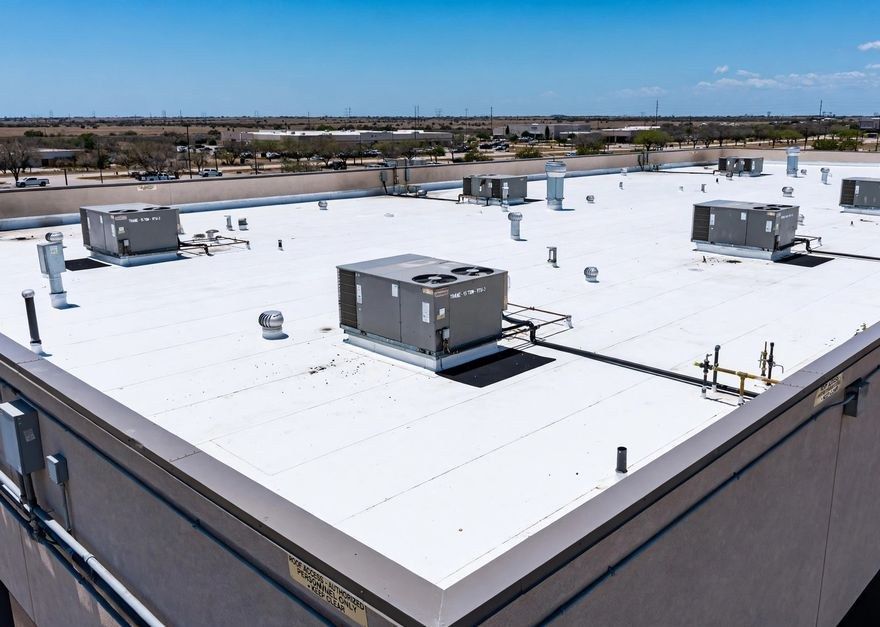
Commercial roofing in Duncanville is mostly flat and low-slope work: TPO, EPDM, modified bitumen and metal, on roofs where drainage, seams and penetrations decide whether the building stays dry. The buyer is an owner or a property manager, and the questions are different from a residential job: how long will the building be disrupted, what is the scope in writing, and what does the inspection record show.
We do not list building types we have not served, and we do not claim experience we do not have. What we offer is a written scope, dated photo documentation, and work scheduled around the building. If your building needs a commercial roof, call us and describe it, and we will tell you honestly whether it is work we do.
Why Building Owners Call Us First
A commercial roof is bought on scope and schedule, and owners call us because the quote is written and the work is scheduled around the building.
Written Scope
The scope is written before work starts, with the system, the drainage work and the flashing listed, so the building owner can compare it properly.
Scheduled Around Your Building
The work is scheduled around the building, so tenants and operations are disrupted as little as the job allows.
Documented With Photos
The roof is documented with dated photos, so the owner has a record of what was found and what was done.
Handed Back Clean
The drains are cleared, the seams are checked, and the site is left clean, so the building is handed back in working order.
How Our Commercial Roofing Process Works
A commercial job follows the same order every time, so the scope, the schedule and the documentation are all agreed before work starts.
Your Call
You tell us about the building, the roof and the problem. That tells us what to look for on the first visit.
Roof Inspection
We walk the roof, check the drains, the seams and the penetrations, and photograph what we find.
Written Scope and Schedule
We put the scope in writing, with the system, the drainage work and the schedule, before any work starts.
The Work
We do the work on the agreed schedule, with the site kept tidy and the building kept working.
Handover
We walk the finished roof with you, check the drains and the seams, and hand over the photos and the written scope.
Commercial roofing expertise you can verify
Cabrera & Sons Roofing is based at 170 E Hwy 67 in Duncanville, and the commercial work is flat and low-slope roofing: TPO, EPDM, modified bitumen and metal, with drainage designed first. We photograph what we find, give you a written scope, and schedule the work around your building.
- Rated 4.9 out of 5 from 51 Google reviews, with five reviews shown in full on our home page
- TPO, EPDM, modified bitumen and metal, with drainage designed first
- Written scope with the system, the drainage work and the schedule
- Work scheduled around the building, so operations are disrupted as little as possible
- Dated photo documentation handed over with the finished roof
Why Duncanville Trusts Our Commercial Roofing Team
Building owners ask us for commercial roofing when they want a written scope and a schedule they can plan around, and they judge us on whether both hold.
Written Scope You Can Compare
You get a written scope that lists the system, the drainage work, the flashing and the schedule, so you can compare it properly.
Scheduled Around Operations
The work is scheduled around the building, so tenants and operations are disrupted as little as the job allows.
Storm and Insurance Documentation
We document the roof with dated photos and a written scope. We do not negotiate claims and we do not waive deductibles, which is illegal in Texas.
Handed Back Clean
The site is kept tidy, the drains are cleared, and the building is handed back clean.
What Is Included in Commercial Roofing in Duncanville
A commercial roofing job is a defined scope. These are the parts of it, and each one is in the written scope before work starts.
What's Included
Roof Inspection With Photos
We walk the roof, check the drains, the seams and the penetrations, and photograph what we find.
Slope and Drainage Correction
The slope is corrected with tapered insulation where water ponds, so water runs to the drains instead of sitting.
Membrane Installation
The membrane is installed in the system agreed, TPO, EPDM, modified bitumen or metal, with sealed seams.
Flashing and Drain Work
New flashing at walls, penetrations and drains, fitted to the roof rather than caulked over.
Scheduled Around Operations
The work is scheduled around the building, so tenants and operations are disrupted as little as the job allows.
Handover and Final Check
The drains are cleared, the seams are checked, and the roof is walked with you before handover.
Commercial Roof Problems We Solve in Duncanville
These are the commercial roof problems we see most often on Duncanville buildings. Each one is diagnosed on the roof, not guessed from the ground.
Ponding water that stays after rain
Ponding water that stays a day after rain rots the surface from underneath and opens the seams. We correct the slope and clear the drains.
Standing water is a drainage problem, not a surface problem, and it is fixed by correcting the slope and the drains.
Seams pulling apart
Seams pull apart as the membrane moves with heat, and each open seam is a leak. We re-seal the seams and check the rest.
An open seam leaks a little at first and more with every storm. Re-sealing it early keeps the decking underneath dry.
Blocked drains backing water up
Blocked drains back water up across the whole roof. We clear the drains and check the strainers.
A blocked drain turns a flat roof into a shallow pool. Clearing it and checking the strainers restores the drainage.
Flashing leaks at walls and penetrations
Flashing fails at walls and penetrations first, because it moves with heat and the sealant ages. We replace it rather than caulking over it.
Caulk over failed flashing is a temporary cover. A new flashing is fitted to the roof, and the leak stops at the source.
When Duncanville Businesses Call Us
Water ponding after rain
Water is ponding on the roof a day after rain, or stains appear on the ceiling below.
Standing water is a drainage problem. The slope and the drains need correcting before the surface is replaced.
Seams pulling apart or blistering
Seams are pulling apart, or the membrane is blistering and cracking.
Open seams and blisters are the membrane failing. The surface needs replacing, and the drainage needs checking at the same time.
Leak disrupting operations
A leak is disrupting tenants or operations, and the roof needs covering before the next rain.
A commercial leak is an operations problem as well as a roof problem. The opening is covered first, then the permanent repair is quoted.
Roof due for replacement
The roof is being replaced, and the building needs a system with the drainage designed properly.
A replacement is the point where the roof gets the right system and the right drainage, instead of another patch.
Tools and Methods We Bring to Your Roof
Tools & Equipment
Heat welder
A heat welder, to weld TPO seams so they hold through thermal expansion.
Seam roller
A seam roller, to press EPDM and modified bitumen seams flat and check them as they are laid.
Moisture meter
A moisture meter, to find wet decking and insulation before we close the roof up over them.
Ladder and safety harness
A ladder and safety harness, so the crew is tied off on steep pitches and two-story buildings.
Level and tape measure
A level and tape measure, to check the slope and the falls to the drains.
Drainage designed first
Drainage designed first: the slope is corrected with tapered insulation before the membrane goes on.
Methods & Techniques
Seams checked as laid
Seams welded or rolled and checked as they are laid, so no seam is left untested.
Flashing fitted, not caulked
Flashing fitted at walls, penetrations and drains, rather than caulked over.
Scheduled around operations
Work scheduled around the building, so tenants and operations are disrupted as little as possible.
Final walk and drain check
The finished roof walked with you, and the drains checked before handover.
How Commercial Roofing Works in Duncanville
Commercial roofing in Duncanville is procurement, not pitches. The buyers are facilities — school, logistics and municipal buildings along the US-67 corridor and the Main Street district — and the decision is about a written scope, a maintenance contract and how the work fits around the building's operations. The choice that matters most is usually coatings or restoration against a full replacement, made on the evidence of a maintenance-contract walk.
Service Areas
US-67 corridor: The highway commercial edge along US-67, where large flat and low-slope commercial roofs are inspected, quoted and replaced as commercial work.
Main Street district: The downtown district along Main Street, where commercial and mixed-use roofs are inspected with their flat sections and parapet flashing.
Wheatland Road corridor: Commercial buildings along Wheatland Road, where roofing work is scheduled around the building's deliveries and customers.
I-20 north edge: Facilities at the city's north edge along I-20, where large roof areas make drainage the first question on a commercial job.
Local Considerations
Maintenance contracts
Maintenance contracts: A contract puts the roof on a schedule: regular walks, drains and seams checked, and a written record that shows how the roof is ageing year to year.
Coating or restoration vs replacement
Coating or restoration vs replacement: Where the membrane and decking are still sound, a coating or restoration can extend the roof's life. Where they are not, replacement is the honest call, and the walk should show which it is.
Scheduling around operations
Scheduling around operations: Work is sequenced around the building's use — deliveries, customers, school days — so the roof work does not stop the business underneath it.
How Ponding Water Is Found on a Commercial Roof
Ponding water on a commercial roof shows as standing water that is still there a day after rain, with stains on the ceiling below and seams pulling apart. The surface rots from underneath while it looks sound from above.
The work is correcting the slope with tapered insulation, clearing the drains, and installing the new surface with sealed seams and new drain flashing. The surface is only as good as the drainage under it.
Maintenance & Follow-up
Keep drains clear of debris and have the seams checked each year. A flat roof lasts longest when water never sits on it.
Open seams show as gaps where the membrane has pulled apart, with water staining the deck underneath. Each open seam is a leak.
The work is re-sealing the seams and checking the rest, so no seam is left untested.
Maintenance & Follow-up
Have the seams checked each year, and after any storm with wind. An open seam leaks a little at first and more with every storm.
A blocked drain shows as water backing up across the whole roof, with debris piled at the strainer. The roof becomes a shallow pool.
The work is clearing the drain and the strainer, and checking the falls to the drain so water runs off instead of sitting.
Maintenance & Follow-up
Clear the drains each fall, and after any storm that drops debris. A blocked drain is what turns a flat roof into a pool.
Frequently asked questions
Have questions? We have answers. If you do not see your question here, call us at (469) 898-7253.
Call UsWhat commercial roofing systems do you install in Duncanville?
TPO, EPDM, modified bitumen and metal, on flat and low-slope roofs. The choice depends on the roof, the drainage and how the building is used, and we explain the trade-offs before quoting. TPO vs EPDM compared
How do you schedule commercial roofing around our business?
The scope and the schedule are agreed in writing before work starts, and the work is scheduled around the building so tenants and operations are disrupted as little as the job allows. Tell us your constraints on the first call, and we will plan around them.
Do I need a permit for commercial roof work in Duncanville?
Permit requirements vary by job, so ask the City of Duncanville what your job needs. A full replacement and re-decking require a permit. We do not publish a permit fee figure because the published figures conflict.
Will you document storm damage on our commercial roof?
Yes. We inspect the roof and document the damage with dated photos and a written scope, which is what an insurance claim file needs. We do not negotiate claims and we do not waive deductibles, which is illegal in Texas.
What to Check Before You Hire Us
A commercial roof decision starts with a written scope, not a square-foot price.
What you can check
Ask for the scope in writing — system, drainage, seams and schedule — and how the work fits around your building's operations. Ask what a maintenance contract covers and what it does not.
What customers say
Ask to see photos of ponding, seams and drains from the walk before you agree to any work. Call (469) 898-7253 and describe the building and the roof.
Related services
What Duncanville customers say
One of the five reviews on our Google profile, exactly as the customer wrote it. The other reviews are counted in the 4.9 out of 5 aggregate from 51 reviews.
“jared and the crew did an outstanding job on my mother’s flat garage roof in Duncanville. The old roof was in rough shape and needed to be redone, so they got straight to work replacing it. They also fixed the decking and updated the insulation, which made a big difference. The team was professional, efficient, and easy to communicate with, and I’ll be using them again in the future. Cabrera & Sons Roofing is a company that I am happy to recommend to anyone needing a new roof, or a simple repair. Excellent work! ⭐️”
Amelia C
Google review
Get Your Commercial Roofing in Duncanville Quote
Call Cabrera & Sons Roofing at (469) 898-7253. Describe your building and your roof, and we will inspect it, document what we find with photos, and give you a written scope and schedule.