
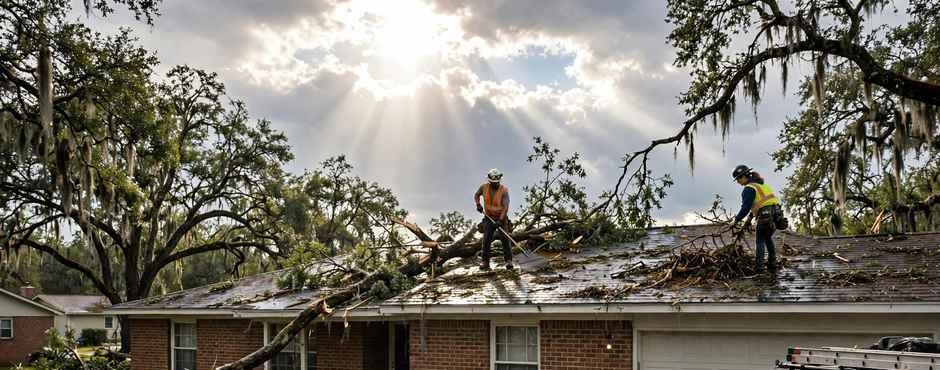
The Duncanville storm calendar
In North Texas, hail season runs March through June, peaking in April and May, with a smaller second round in September and October. The datasets disagree on the single busiest month — April leads on four-county report counts, May leads on Duncanville hail days and thunderstorm days — so do not plan around one month. Within 10 miles of Duncanville there have been 51 hail days since 2006, and the largest stones arrived in June: 3-inch hail in June 2012 and 4-inch hail in June 2023. Hail has hit the Dallas–Fort Worth area in every month of the year, so “hail season is over” is never a safe assumption after June.
Wind is the other half of the season. The strongest gust measured within 10 miles of Duncanville since 2006 was 81 mph on 13 March 2019, and the 28 May 2024 straight-line wind event damaged roofs across the metro at 80–95 mph, leaving more than 600,000 Oncor customers without power. Preparation means getting ready for both hail and wind, not one or the other.
February to early March: the pre-season check
The best time to prepare is February and early March, before the peak starts. That is when to get the roof inspected, read your insurance policy, and fix the small things a storm will exploit.
- Book an inspection. A roof inspection before the season establishes the roof’s condition on the record — shingles, flashing, vents, pipe boots, gutters and the attic side. If hail hits in April, you will be glad the “before” photos exist.
- Read your policy. Find your wind and hail deductible — most Texas homeowners now carry a percentage deductible, commonly 1–2% of dwelling coverage — and check whether your cover is replacement cost or actual cash value. Knowing this before a storm beats learning it after one.
- Clear gutters and downspouts. May is the wettest month at DFW Airport, averaging 4.78 inches, and Duncanville rain arrives in short violent bursts. Blocked gutters overflow onto fascia and back water under the eaves.
- Trim limbs over the roof. Straight-line winds snap limbs onto roofs; the 28 May 2024 surveys noted widespread tree damage. Keep limbs clear of the roofline.
- Check flashing and sealant. Heat hardens sealant and wind tugs at flashing edges. Dried, cracked sealant around chimneys, vents and skylights is a leak waiting for the next downpour.
During the season: after every storm
After any storm, walk the property from the ground: shingle pieces, granules in the gutters, dented vents and gutters, and any new ceiling stain inside. Photograph what you find with the date. If you find damage, get a professional inspection and a written report before repairs start — and remember that a roofer may document damage and meet the adjuster, but may not act on your behalf with your insurer, and you must pay your own deductible under Texas law. Our storm damage roof repair page explains what that inspection should produce, and our hail damage guide covers the signs in detail.
September to October: the second round
September brings a smaller second round of storms, and October is the secondary severe-weather bump in North Texas. Use the autumn to repeat the spring checks: gutters cleared before winter, flashing sealant checked, and a roof maintenance visit that looks at ventilation and shingle condition. Winter Storm Uri in February 2021 showed what a multi-day freeze can do here — 139 consecutive hours below freezing in Dallas — so a sound roof going into winter matters even in Texas. To arrange a pre-season inspection, call (469) 898-7253.