
Texas heat is the slow roof-ager
DFW Airport averages 106 days a year at or above 90°F and 20 days at or above 100°F, with a July mean of 85.7°F and an average high of 96°F. That heat is the dominant slow roof-ager in North Texas: UV breaks down asphalt binder and strips protective granules, and daily expansion and contraction loosens fasteners and opens seams. South- and west-facing slopes age fastest. Any honest lifespan comparison starts here, because the same shingle that lasts decades in a mild climate works much harder in Duncanville.
How long each material lasts
Architectural shingles. No single Texas shingle lifespan is settled: installer sources put a quality architectural shingle at 15–22 years in Central Texas heat, others at 22–28 years, and rated terms run 20–30 years. Those are regional installer estimates, not a single fact, and they conflict with each other — so this guide does not state one number. The honest framing is that heat plus hail shortens real-world life versus the rated term, and the gap is the story.
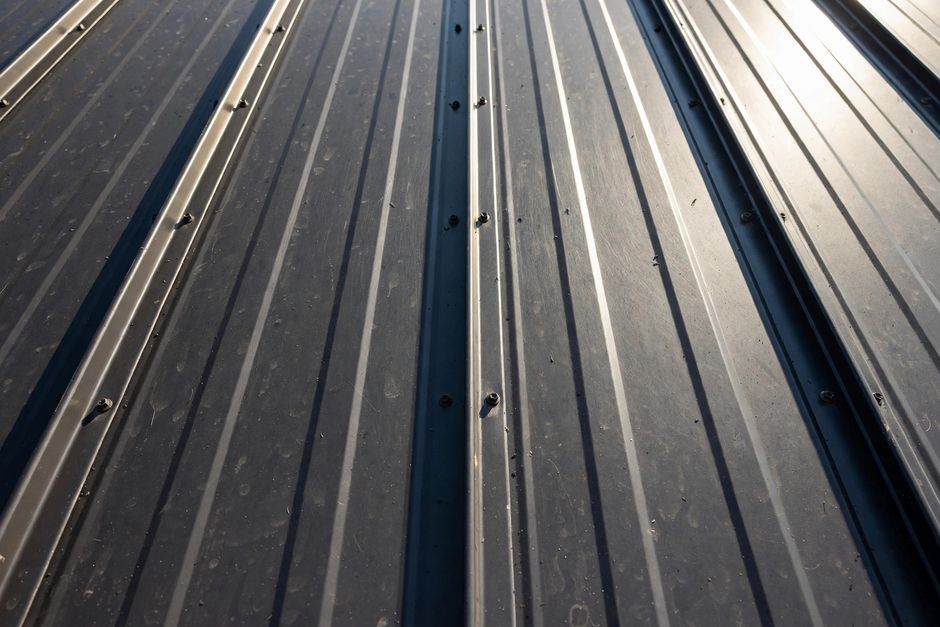
Metal. DFW sources position metal as a 40–70-year option, with standing seam at the top end. Metal does not rely on an asphalt binder, so it does not age the way shingles do under UV and heat, and it sheds hail and rain differently. The trade-off is cost and the need for correct installation: fasteners, flashing and panel attachment are what make or break a metal roof in a wind event.
The verdict, such as it is: metal lasts longer than shingles in Texas heat. The question is whether the extra decades are worth the extra cost for your home, your plans and your budget — not whether one material “wins.”
Hail, wind and fire
Hail. Neither material is hail-proof. Duncanville has seen 4-inch hail (Cedar Hill, 12 June 2023, about 6 miles away) and 3-inch hail (26 April 2026, as close as a mile away). Class 4 impact-resistant shingles are tested to UL 2218 — a 2-inch steel ball dropped twice from 20 feet with no through-crack — but a 3-inch hailstone carries about five times that energy. Metal dents where shingles bruise; denting is cosmetic until it is not, and the insurance treatment differs — ask your agent before you decide.
Wind. The NCTCOG-adopted design wind speed for this area is 115 mph (3-second gust), and the strongest gust measured within 10 miles since 2006 was 81 mph on 13 March 2019. Shingle wind performance depends on the adhesive seal and the nailing; sealant strips lose strength as asphalt ages under attic heat. Metal performance depends on panel attachment and edge details.
Fire. Duncanville requires Class A or B roofing on dwellings under its amendment to the 2021 International Residential Code — stricter than the regional norm, which allows Class C. Both metal and architectural shingles can meet that requirement; Class C alone is not enough for a home here.
Cost, honestly stated
The published cost ranges disagree by more than twofold, and this guide shows the spread rather than picking one figure. Architectural shingles run $3.25–$8.00 per square foot installed in 2026 DFW sources, or $350–$800 per square, with the bulk of sources at $400–$670 per square. Standing-seam metal runs $6–$21 per square foot, with the spread driven by gauge, finish and residential versus commercial scope. Metal costs also moved sharply in 2026: steel and aluminium tariffs doubled, and metal roofing costs are reported up 15–25% since 2024. Any range you read should carry a date — undated prices are already stale. See our roof replacement cost guide for the full attributed ranges, and our metal roofing and shingle roofing pages for how each system is installed.
One more caution: Texas Property Code §202.011 protects qualifying wind- and hail-resistant shingles from some HOA restrictions, but it is written for shingles. It does not protect metal. If your subdivision has an architectural review process, check it before choosing a material. To talk through which material fits your home, call (469) 898-7253.