
Why Duncanville roofs grow algae and moss
Warmth plus humidity grows algae on shingles. DFW relative humidity averages around 80% in the mornings, and DFW Airport averages 106 days a year above 90°F. That combination is ideal for the algae that causes black streaks on asphalt shingles, and for moss on shaded, tree-covered slopes. North-facing slopes and homes under mature trees — common in Fairmeadows and other established Duncanville areas — stay damp longer after rain and grow the most. The streaks are the visible sign; the concern underneath is that algae holds moisture against the shingle surface, and moss lifts shingle edges so wind and rain can get underneath.
Installer sources describe algae as degrading shingles over time, and manufacturers sell algae-resistant granules as a standard Texas option. Treat the growth as a maintenance issue to manage, not a cosmetic quirk to ignore — and not an emergency either.
The safe cleaning method
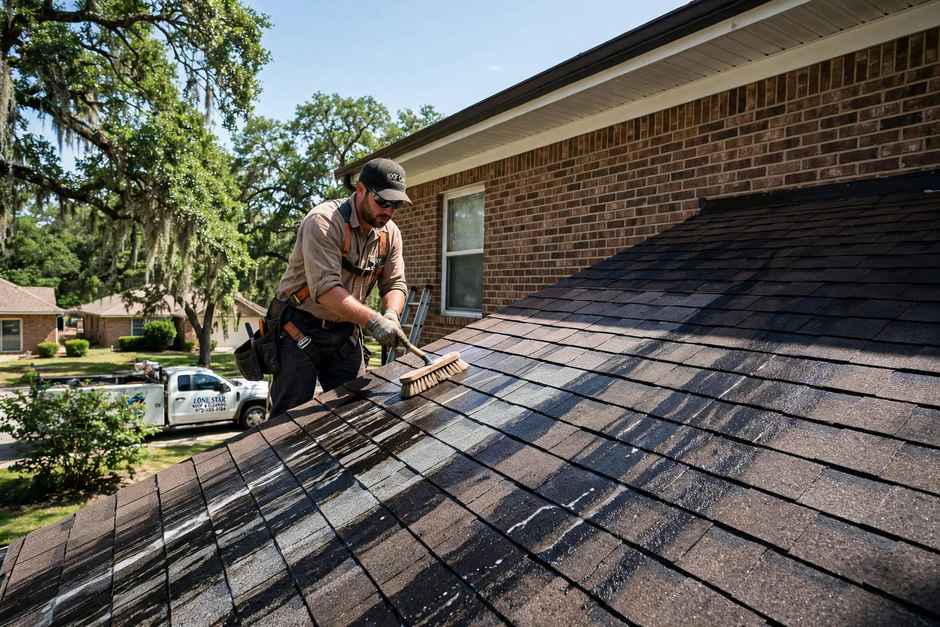
The safe method is a low-pressure chemical treatment, not a pressure washer. A roof-safe cleaning solution is applied at low pressure, left to work, and rinsed gently — or left for the rain to rinse, depending on the product. Moss is removed by hand or with a soft brush after the treatment has loosened it, working down the slope so shingles are not lifted. The work is done from a ladder or from the roof only when the roof is dry and the pitch allows it safely; on a steep roof, it is a professional job.
Never pressure wash a shingle roof. High-pressure water strips the protective granules that shield the asphalt mat from UV, and it drives water under the shingles. Granule loss is the visible cost, and the invisible cost is a roof that ages years faster. If a contractor proposes pressure washing your shingles, decline. See our roof maintenance page for what a routine cleaning visit covers, and our shingle roofing page for how shingles are built to resist this growth.
Prevention after cleaning
Prevention is mostly about sun and air: trim limbs that shade the roof all day, keep gutters clear so water does not back up onto the eaves, and keep debris off the roof surface. Zinc or copper strips near the ridge are a common preventive measure — rainwater carries trace metal down the slope and discourages regrowth — but they are a supplement to cleaning, not a substitute. When the roof is eventually replaced, algae-resistant granules are worth discussing. How often to check depends on shade: a heavily shaded roof should be checked each spring, and any roof after a wet season. For the inspection cadence, see how often to get a roof inspection in Duncanville. To arrange a safe cleaning and inspection, call (469) 898-7253.